
Figure 1
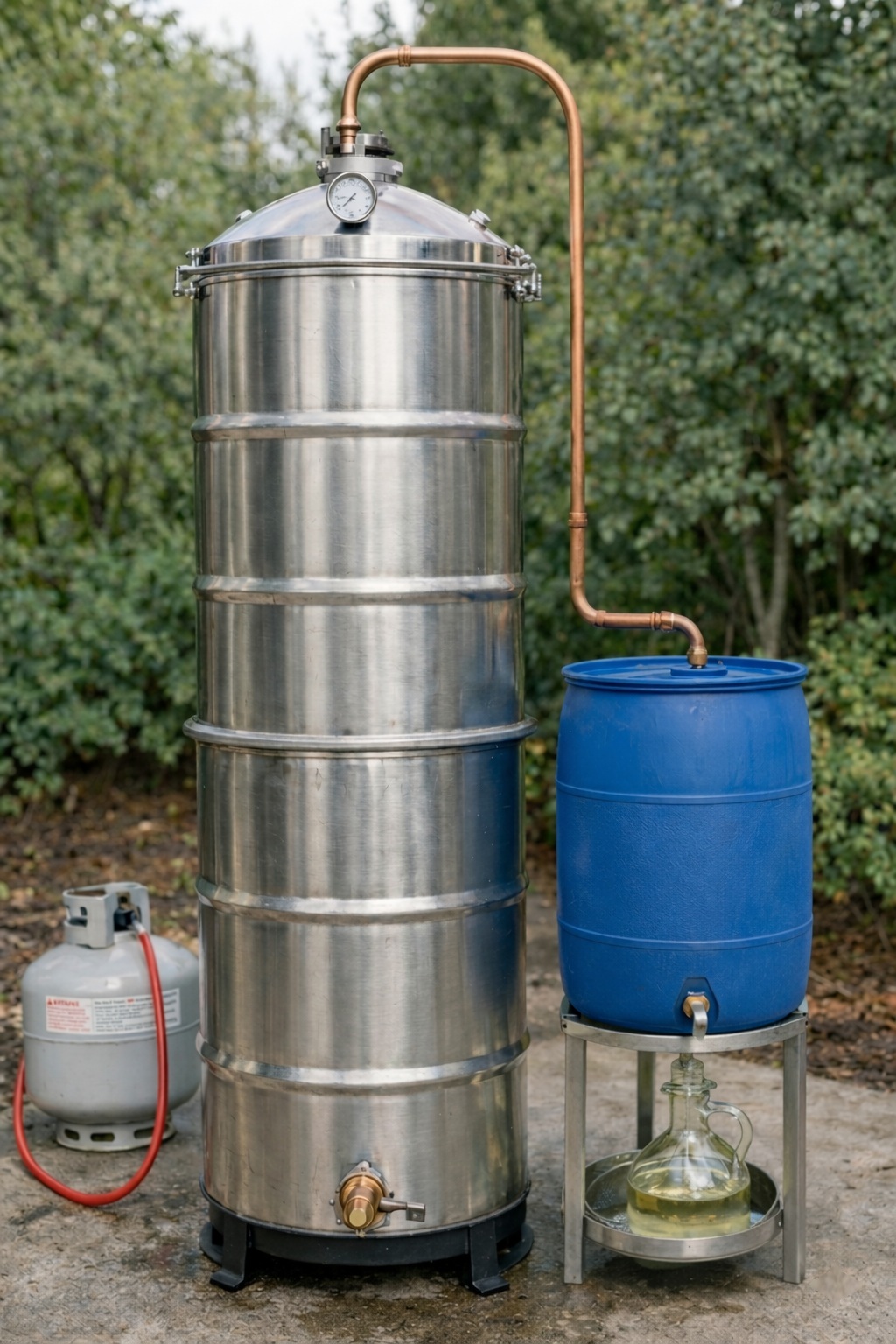
Figure 2
Team 7
Team Members |
Faculty Advisor |
Ahmad Al Zouabi |
Dr. Kristina Wagstrom Sponsor United States Department of Agriculture (USDA) |
sponsored by
Sponsor Image Not Available
Designing an Essential Oil Still
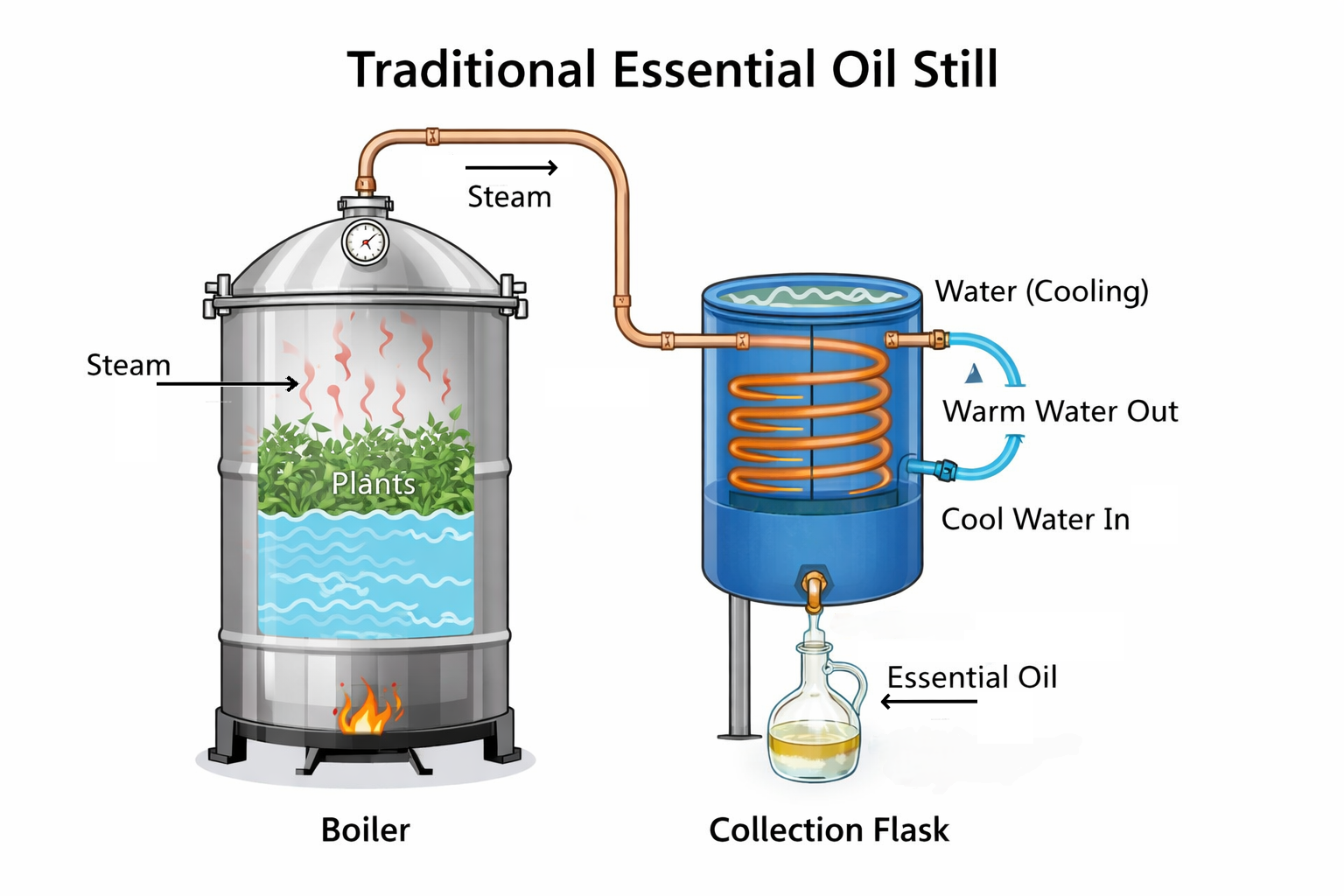
Demand for essential oils has grown due to the significant cultural value placed in natural products. Essential oils have many applications, assisting in the physical and emotional wellbeing of many individuals across a varied spectrum of backgrounds. Due to the growing importance of essential oils, ensuring accessibility of the oil across all economic levels is of great importance. To this end, our team worked with a local farmer who cultivates various herbs before extracting the essential oils for many diverse communities. The farmer requested our team to design and manufacture a 110-gallon essential oil still, upscaling operations from his previous 15-gallon capacity, reducing the number of production/cleaning cycles needed. Our team constructed a still capable of hydro-distillation and steam-distillation, using two 55-gallon stainless steel oil drums, copper tubing, and other materials. The two barrels are stacked vertically on a steel stand; the lower drum contains boiling water, while the upper holds plant material. A funnel is attached to the top barrel; this connects to the condenser where the oils are collected. The design allows the still to run using one or both drums, accommodating whichever distillation method the farmer needs. This design allows for effective separation of oils from the plant matrix without damaging the plants, while permitting use of the most effective distillation method for each plant species. A key design consideration was the economic constraint of our $3,000 budget. To ensure a safe and effective design, we installed a thermometer in the funnel, allowing for continuous temperature evaluation. Using our larger still, the farmer will be able to produce larger batches of essential oils at a lower cost of production, improving the accessibility of the essential oils.