

This video contains proprietary information and cannot be shared publicly at this time.
Figure 1
Team 10
Team Members |
Faculty Advisor |
Michelle Allen |
Ioulia Valla Sponsor Pfizer |
sponsored by

PMI Reduction
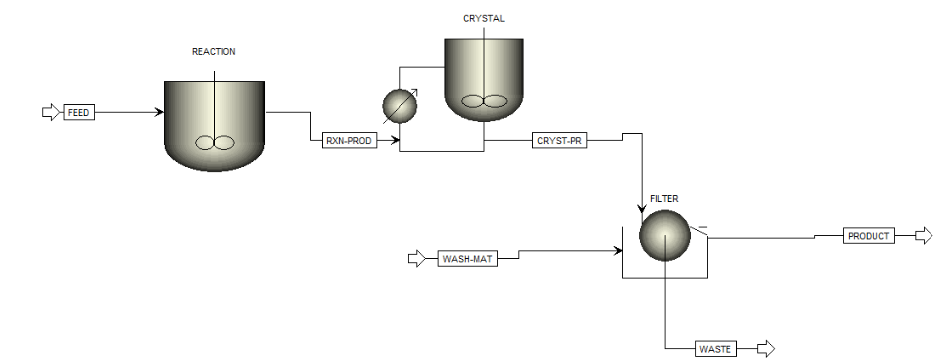
Modern pharmaceutical manufacturing is historically material intensive, often requiring large volumes of solvents and energy to produce relatively small quantities of active product. To mitigate the resulting environmental and economic burdens, our team is collaborating with Pfizer’s Groton site to optimize production pathways by reducing Process Mass Intensity (PMI). Defined as the ratio of total raw material mass to the mass of isolated product, PMI is a critical sustainability metric. Because maintaining high product purity is an ethical priority, our challenge is to enhance material efficiency without compromising chemical integrity. Our methodology begins with a rigorous analysis of an initial sustainability dataset spanning over 40 synthetic steps across multiple API manufacturing campaigns. By evaluating this data at the unit operation level, we are identifying key trends in solvent selection and method typology to quantify their specific effects on PMI. This data driven approach allows us to narrow our focus to the specific material categories (solvents, reagents, salts) and unit operations (reaction, distillation, crystallization) that contribute most significantly to overall waste. With this narrowed scope, we will utilize Aspen Plus software to flowchart existing pathways and perform rigorous unit analysis. This enables us to simulate various operating conditions and test alternative solvents or recycling methods to minimize waste at the source. Furthermore, we are conducting a comprehensive economic analysis to ensure our technical solutions remain commercially viable while leveraging Pfizer’s onsite resources. Ultimately, this project transforms empirical data into practical engineering strategies for process intensification, aiming to drive PMI values toward Pfizer’s target of below 20 per step and establish a more sustainable, efficient production cycle.