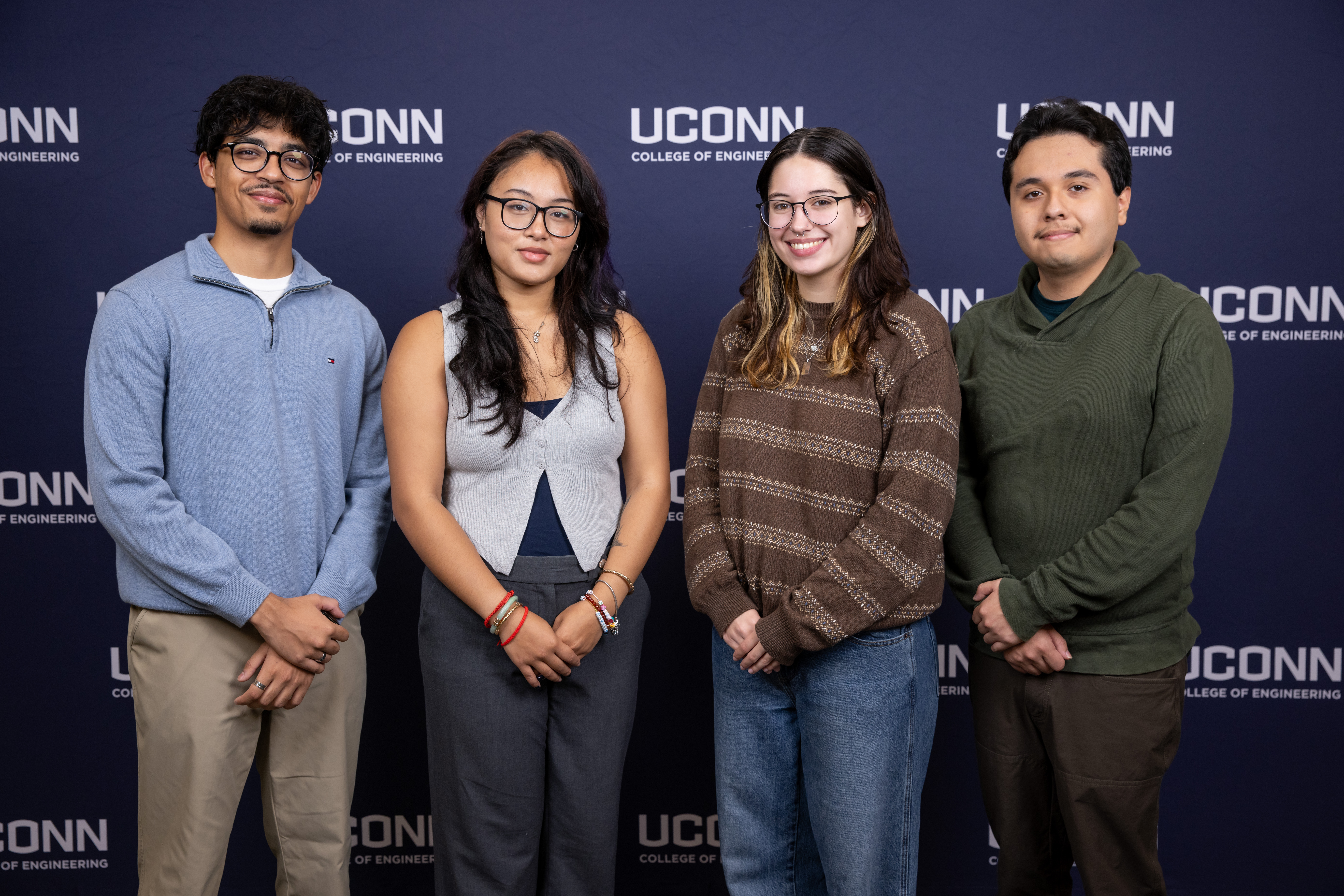
Team 4
Team Members |
Faculty Advisor |
Ishayu Ray |
Wei Wei Sponsor Budderfly |
sponsored by

IoT-Ready Energy Efficient Device
This project aims to design and prototype an IoT-enabled energy monitoring and control device that replaces traditional mechanical timers such as the Intermatic T104 used for controlling commercial lighting systems. The device will support smart scheduling, remote configuration, and energy monitoring, improving reliability and energy efficiency for commercial establishments like restaurants. The system will be built around an ESP32-based controller integrated with Wi-Fi connectivity to communicate with the Budderfly cloud network. Through this network, administrators will configure up to six schedule points per day, allowing lights to switch on or off based on fixed times, sunrise/sunset offsets based on ZIP code, or optionally store opening and closing times obtained online. Once configured, the device must operate autonomously without internet connectivity, ensuring reliable operation even during network outages. In addition to scheduling, the device will include accurate current and voltage sensing (±1% full-scale accuracy) to monitor electrical usage and send energy data to the cloud for analytics. The system will support single-pole or double-pole load switching, handling circuits ranging from 15A to 50A at up to 277VAC, with proper grounding, protection, and compatibility with wire sizes from 14AWG to 6AWG. A modular hardware approach may be implemented to support different current ranges. The device will feature a minimal local interface, including LED indicators to display schedule status and load state, along with a simple On / Auto / Off control knob whose state changes will be reported to the cloud. The design must prioritize low power consumption, high reliability, and durability, targeting 10 years of operation with up to six switching events per day. This solution will modernize commercial lighting control by combining IoT connectivity, energy monitoring, and robust long-term operation in a single device.
Our team collaborated with Electrical and Computer Engineering 11 on this project.