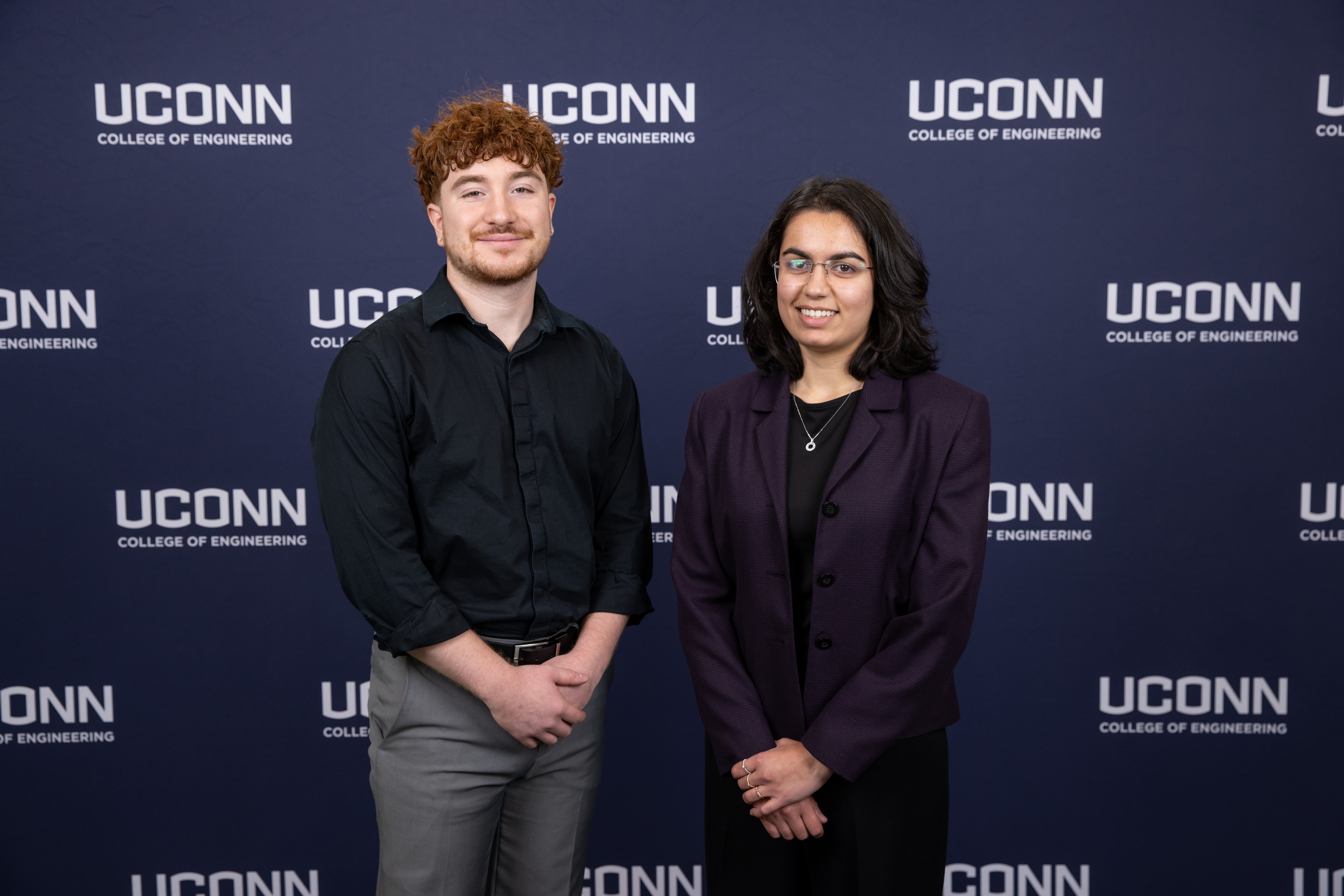
Team 2638
Team Members |
Faculty Advisor |
Samuel Williams |
Shalabh Gupta Sponsor General Dynamics Electric Boat |
sponsored by
Sponsor Image Not Available
Model Predictive Control for Autonomous Underwater Vehicles
Executive Summary The underwater environment presents unique challenges that require innovative engineering solutions. In collaboration with Electric Boat—a leader in nuclear submarine design and construction—our team is developing advanced control strategies for autonomous underwater vehicles (AUVs). This project focuses on creating high-performance algorithms that improve maneuverability and efficiency, laying the groundwork for next-generation maritime autonomy. Core Objectives For 2025–2026, we are designing, simulating, and testing Model Predictive Controllers (MPCs) with the following goals: - Accurate Modeling: Building a 6-degree-of-freedom (6-DOF) dynamic model to reflect real subsea vehicle behavior. - Enhanced Maneuverability: Enabling complex operations like zero-speed station keeping, depth transitions, and independent pitch/heading control while optimizing performance. - Real-Time Adaptability: Designing controllers that can switch maneuvers and objectives on the fly, running at or faster than real-time without recompilation. Hardware-in-the-Loop Testing To validate our designs, we’re developing a hardware-in-the-loop (HIL) testbed using embedded systems like Raspberry Pi. This setup processes simulated sensor data and generates real-time control outputs, allowing us to rigorously test controller performance in realistic conditions. Future Goals We aim to eventually deploy these controllers on a physical AUV. Long-term, we’re building toward resilient autonomy—capable of handling thruster failures, adapting to ocean currents, and performing coordinated depth and heading changes.
Our team collaborated with Computer Science & Engineering 47 on this project.