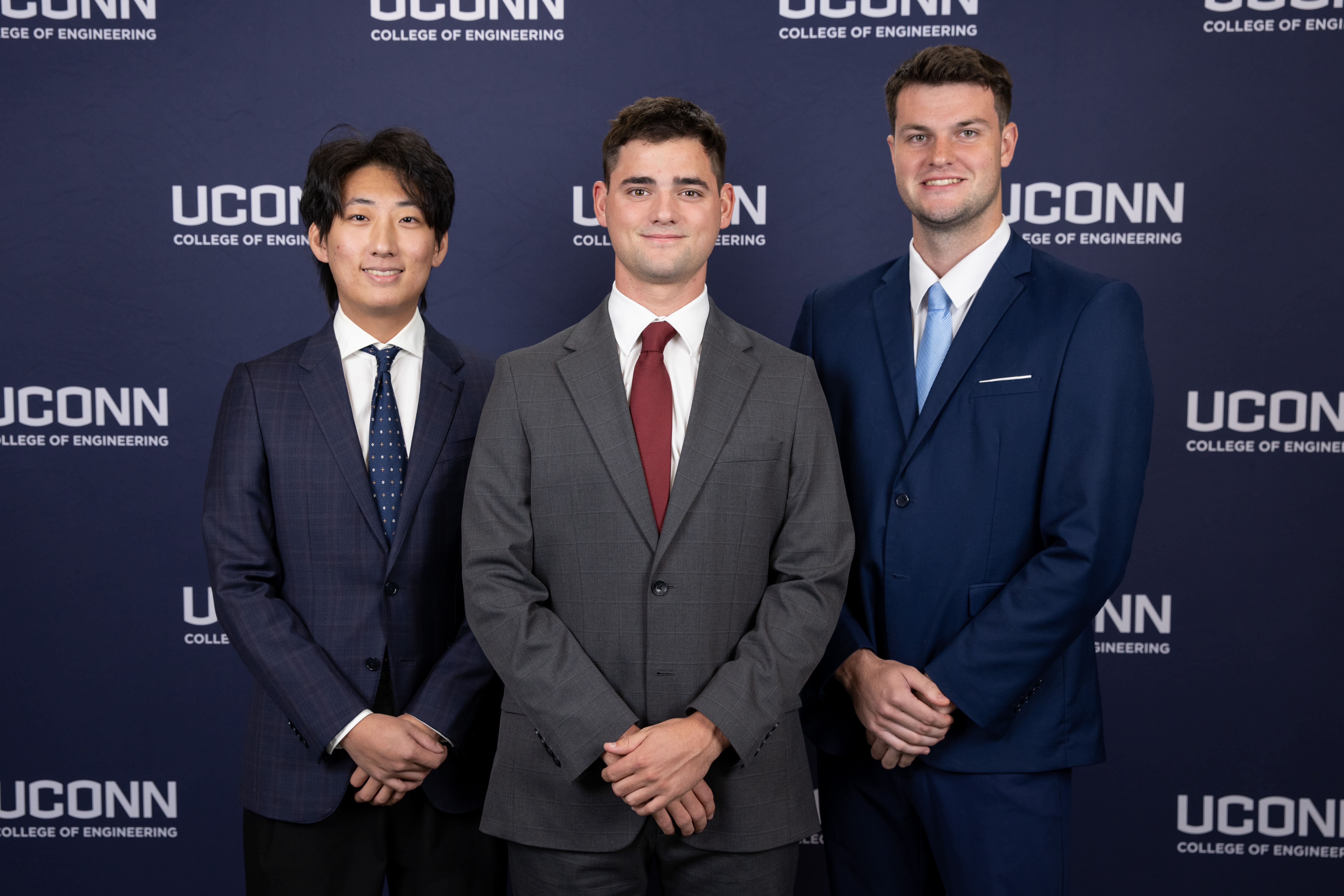
Team 1
Team Members |
Faculty Advisor |
Ryker Bahre |
Fiona Leek Sponsor The Hartford |
sponsored by

Compatibility Study of PEX Tubing and Toilet Supply Lines
This project investigates the long-term compatibility and degradation behavior of crosslinked polyethylene (PEX) tubing and polyacetal (POM-C) toilet supply line components when exposed to chlorinated water. The study replicates realistic residential plumbing conditions to better understand how temperature, chlorine concentration, and mechanical stresses influence polymer aging and failure mechanisms. Samples of PEX tubing and polyacetal coupling nuts were exposed to controlled chlorinated water environments under varying temperatures and free-chlorine concentrations. Both static immersion tests and a dynamic recirculating flow system modeled after ASTM F2023 were used to simulate real plumbing service conditions and accelerate degradation processes. Material degradation was evaluated through a combination of mechanical, chemical, thermal, and microstructural characterization techniques. Tensile testing was performed to measure changes in strength, modulus, and elongation, while Fourier Transform Infrared Spectroscopy (FTIR) and Oxidative Induction Time (OIT) analysis were used to monitor oxidation and antioxidant depletion. Differential Scanning Calorimetry (DSC) and Thermogravimetric Analysis (TGA) were used to evaluate thermal property changes, and microscopy techniques were applied to observe cracking, discoloration, and surface damage associated with chlorine-induced polymer degradation. The goal of the project is to quantify degradation mechanisms, compare failure behavior between materials, and provide The Hartford with data and testing methodologies that can be used to assess long-term reliability of plumbing polymers exposed to chlorinated water systems.