
Figure 1
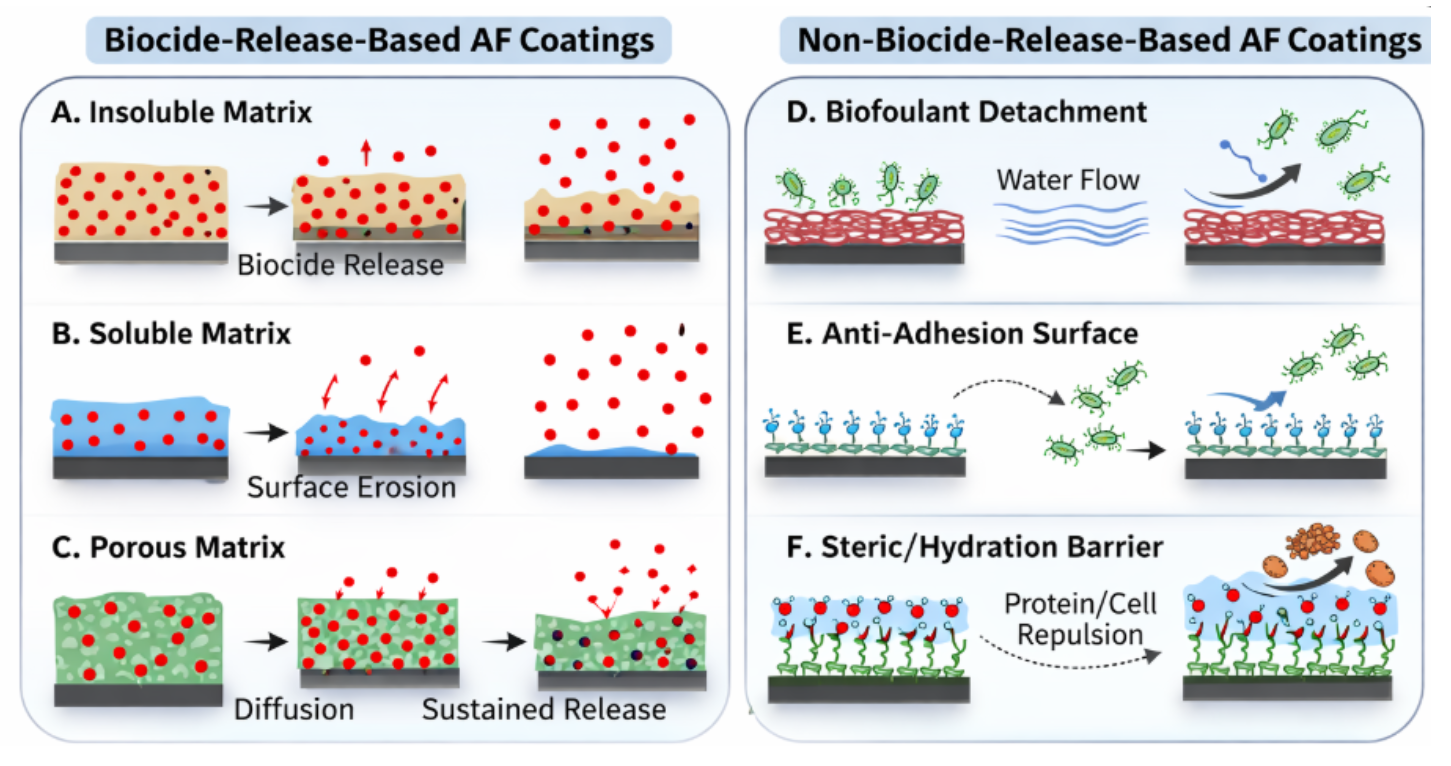
Figure 2
Team 01
Team Members |
Faculty Advisor |
Andreas Giannakidis |
Dr. Yang Qin Sponsor UConn College of Engineering |
sponsored by
Sponsor Image Not Available
Biocide-Free Amphiphilic Polymer for Marine Antifouling Coatings
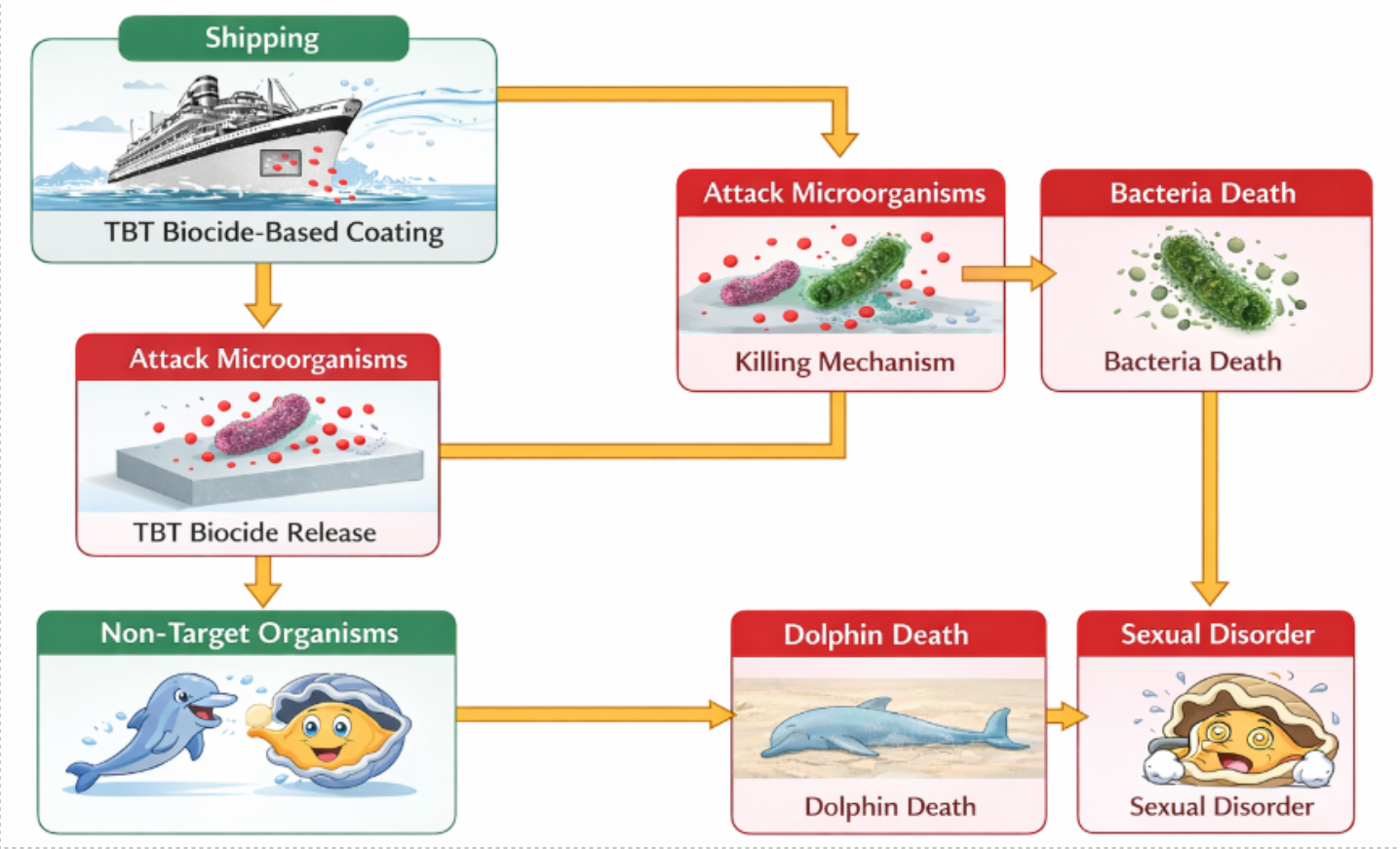
Marine organisms like mussels, algae, and barnacles commonly attach themselves to boat hulls. This attachment, known as biofouling, increases drag and decreases a ship’s fuel efficiency. Many of the current coatings prevent biofouling by releasing toxic chemicals like biocides into the environment. However, increasing regulations are preventing the use of these coatings because of their noticeable harm to ecosystems. Figure 2 depicts how biocide-based coatings can attack microorganisms and potentially harm species unrelated to biofouling, leading to negative effects in marine environments. Researchers are exploring other coatings options that may prevent organisms from attaching rather than directly killing them. As shown in Figure 1, a non-biocide antifouling coating works by reducing the strength of organisms when sticking to surfaces or by allowing them to detach when water flows across the surface of the hulls. The goal of this project was to design a silicone-based coating with tunable surface properties while preserving its strong durability. Materials containing silicone are commonly used because of their water and heat resistance. We developed a chemical process that allows organic groups to be attached to a silicone polymer. Altering these groups allows for fine tuning of the surface behavior, making it difficult for organisms to attach or remain on boat hulls. Overall, the objective of this project was to create a coating that reduces marine biofouling and the release of harmful chemicals into marine ecosystems. This process supports safer environments and improves boat efficiency and coating performance.