
Figure 1
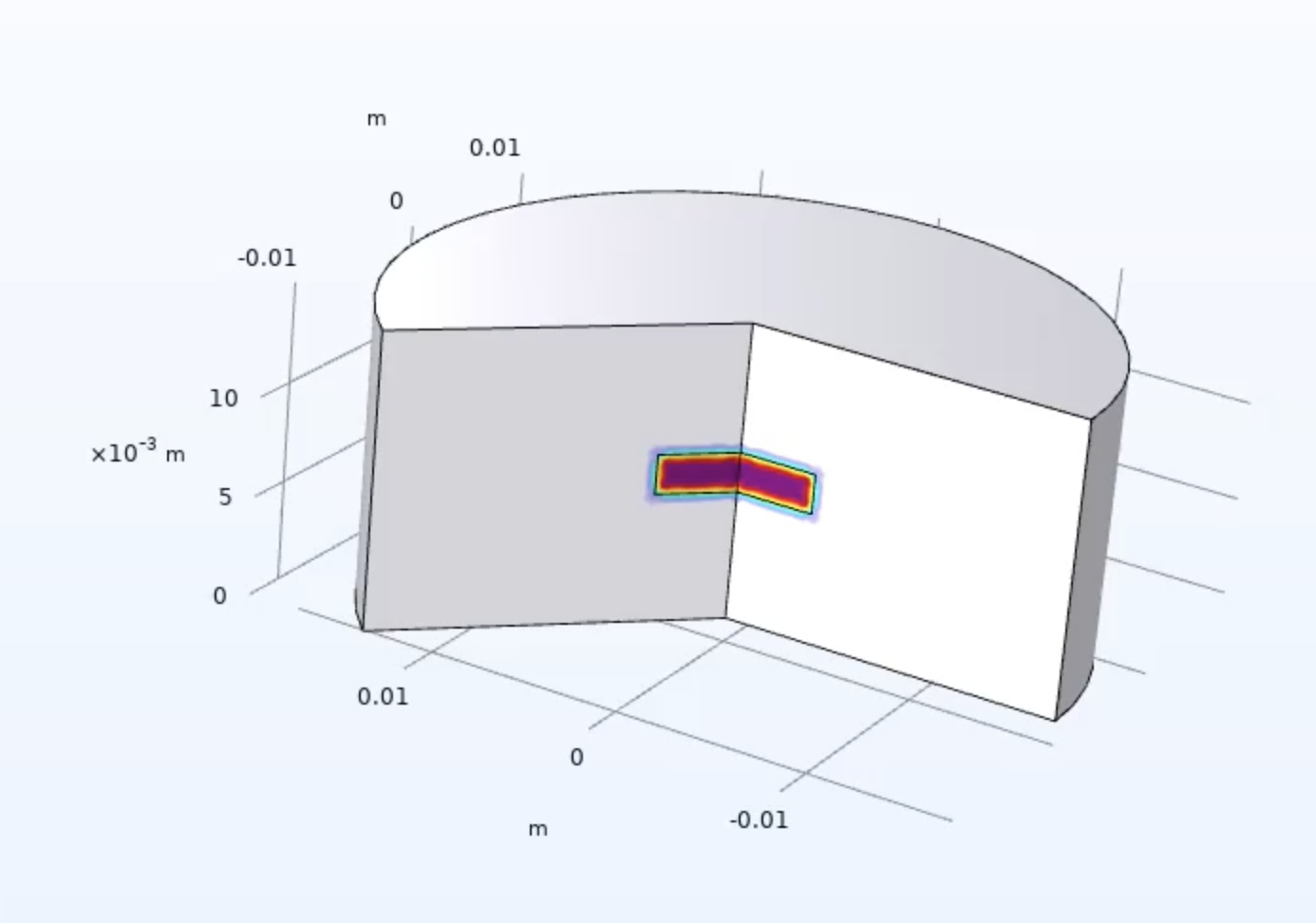
Figure 2
Team 9
Team Members |
Faculty Advisor |
Shantel Porter |
Mu-Ping Nieh Sponsor Medtronic |
sponsored by

Using Computational Modeling to Study Paclitaxel Diffusion from Hydrogel Disks into Lung Tissue
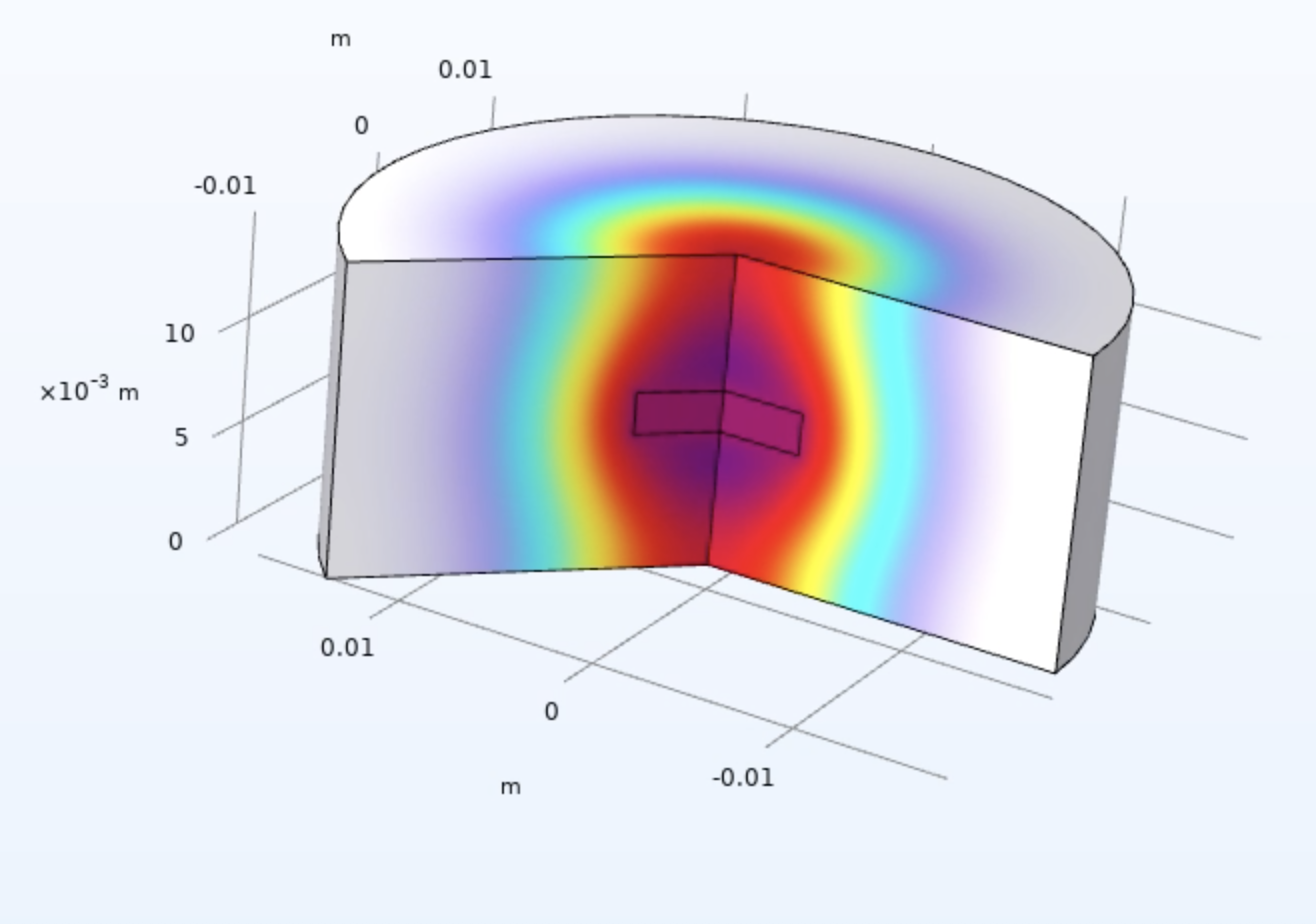
Lung cancer is the leading cause of cancer-related deaths worldwide. Although chemotherapy drugs such as paclitaxel can slow tumor growth, traditional delivery through the bloodstream often exposes healthy tissues to the drug, leading to significant side effects. To improve treatment effectiveness while minimizing systemic exposure, Medtronic is exploring localized drug delivery systems that release chemotherapy drugs directly near lung tumors. To support this effort, our team developed computational models using COMSOL Multiphysics to study how paclitaxel moves through materials involved in this drug delivery system. We first simulated drug diffusion from a hydrogel disk into a surrounding liquid environment. This simplified model allowed us to determine an important transport property known as the diffusion coefficient of the hydrogel, which was obtained from experimentally measured paclitaxel flux into a surrounding aqueous solution provided by Medtronic. After determining the diffusion coefficient of the drug in the hydrogel, we extended the model to simulate diffusion from the hydrogel into agarose, a gel material commonly used to mimic biological tissue in laboratory studies. Agarose has a high-water content, like many biological tissues and provides a stable environment for studying diffusion. Using this three-dimensional model, we simulated how paclitaxel spreads from the hydrogel into the surrounding tissue-like material over time. Overall, our modeling framework allows for a better understanding of controlled release of drug delivery in tissue, benefiting public health.