This video contains proprietary information and cannot be shared publicly at this time.
Figure 1
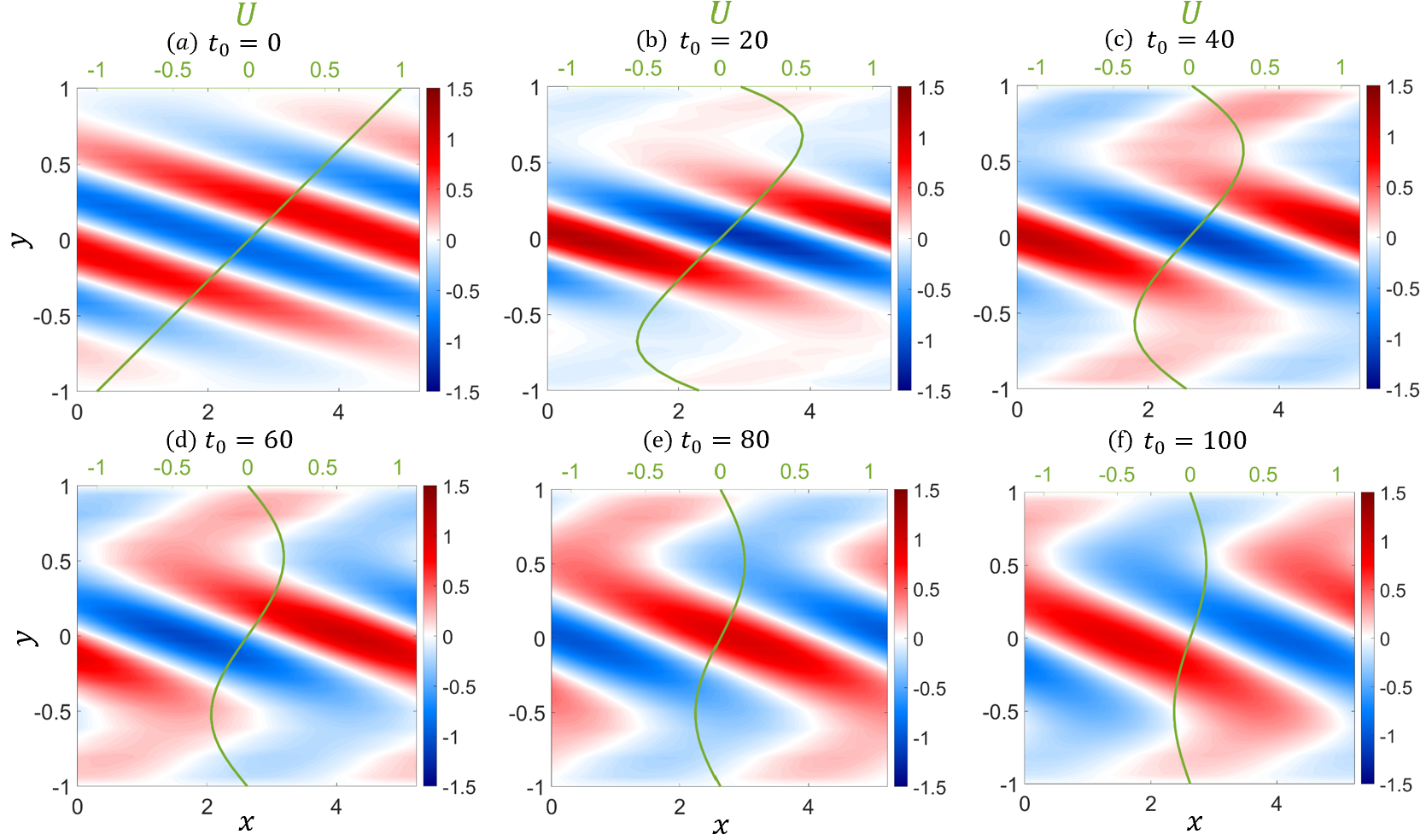
Figure 2
Team 60
Team Members |
Faculty Advisor |
Zhengyang Wei |
Prof. Chang Liu Sponsor University of Connecticut |
sponsored by

Input-output Analysis of Wall-bounded Shear Flow Using Linear Matrix Inequalities
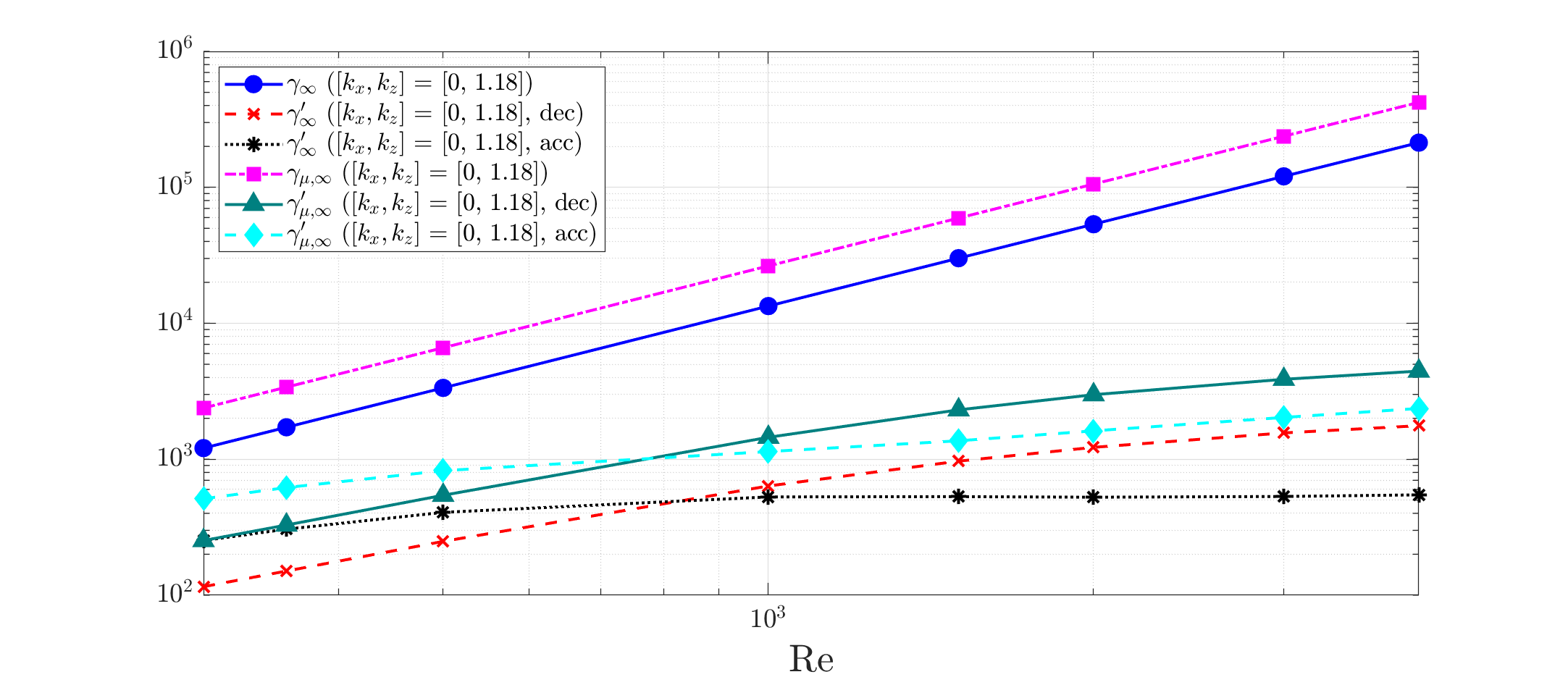
This work develops computational frameworks for the stability analysis of steady and unsteady wall-bounded shear flows. By formulating the linearized Navier–Stokes equations as both linear time-invariant (LTI) and linear time-varying (LTV) systems, this project derives several optimization-based approaches using linear matrix inequalities (LMI). These frameworks address a key limitation of traditional linear stability analysis, which primarily focuses on modal eigenvalue behavior and does not directly quantify worst-case input–output amplification due to external disturbances. The initial LMI approach for linear time-varying systems yields an upper bound on transient energy growth that closely matches transient growth computed via singular value decomposition. Our approach offers the advantages of providing a rigorous certificate of uniform stability and an invariant ellipsoid to bound the solution trajectory. The LMI framework is also applied to both LTI and LTV models to evaluate worst-case input–output amplification and compare the results with existing methods in the literature and numerical simulations. Furthermore, the resulting Lyapunov matrix can be decomposed to identify dominant flow structures, which reveal streamwise velocity modes consistent with the Orr mechanism.